Why LMFP Batteries are the Next Generation of Lithium Batteries?
Author :
Tailg
Lithium-ion technology has become one of the most widely used rechargeable battery technologies in the world for electric cars, bikes and even smartphones or laptops.
But lithium-ion batteries are not a single type of battery. There are several different lithium-ion chemistries where each offers a different balance of energy density, safety, cost, performance and lifespan.
One of the newer combinations attracting significant attention is Lithium Manganese Iron Phosphate or LMFP.
LMFP can be viewed as an evolution of Lithium Iron Phosphate, or LFP, with manganese added to the cathode material. The goal is to combine many of LFP’s advantages, such as safety, durability and cost competitiveness. Along with that you get a higher operating voltage and greater energy-density potential.
Research suggests LMFP can offer approximately 15% to 20% higher theoretical energy density than conventional LFP, while retaining many of its desirable characteristics.
In simple terms, LMFP aims to deliver the safety and durability advantages of LFP as well as higher voltage and greater energy-density potential.
Why Is LMFP Considered an Advancement Over LFP?
LFP has become popular because it provides an attractive balance between safety, cost and lifespan. But energy density has traditionally been one of its limitations.
Energy density determines how much energy a battery can store relative to its weight or size.
For an electric bike, higher energy density can potentially mean more usable energy without requiring a proportionally larger battery pack. This can be particularly valuable when manufacturers want to provide strong performance and practical range without making the battery excessively large or heavy.
LMFP addresses part of this limitation by introducing manganese into the cathode.
According to a 2026 review in the Journal of Energy Storage, LMFP combines the safety and cost advantages associated with LFP with the higher operating voltage of lithium manganese phosphate. Its theoretical energy density is estimated to be around 15% to 20% higher than LFP.
That makes LMFP an interesting middle ground between different lithium-ion battery technologies.
1. Higher Energy-Density Potential
One of the biggest reasons LMFP is attracting attention is its higher voltage. LFP typically operates around 3.2V, while the manganese component in LMFP introduces a higher-voltage plateau around 4.1V. This can increase the amount of energy that can theoretically be stored within a given battery system.
For electric bikes, this can have practical implications. A battery with greater energy-density potential can help manufacturers balance range, battery size, weight and performance more effectively.
That doesn’t mean every LMFP battery will automatically provide longer range than every LFP battery. Actual range depends on battery capacity, motor efficiency, vehicle weight, riding conditions and many other factors.
But the chemistry gives manufacturers more room to optimize those factors.
2. Long-Term Battery Life
Battery lifespan is especially important for electric-bike owners.
An electric bike used for daily commuting can go through hundreds of charging cycles over several years. A battery that loses capacity quickly can eventually affect the bike’s usable range and overall ownership cost.
LMFP is being developed with long cycle life as one of its important advantages. Scientific reviews identify long cycle life as one of the key characteristics of LMFP, although actual cycle performance varies depending on cell design, materials, charging conditions and battery-management systems.
The TAILG Jaguar T72L, for example, uses a 76V/32Ah LMFP battery rated at 3000+ charging cycles.
TAILG specifies this as up to 80% capacity retention through 3000+ cycles under the relevant testing conditions.
Importantly, 3000+ cycles does not mean the battery stops working after 3000 charges. The battery can continue operating beyond that point, although its capacity will naturally decline over time.
For a frequent electric-bike commuter, that kind of cycle-life rating can be an important consideration.
3. Strong Safety Characteristics
Safety is another reason phosphate-based lithium-ion chemistries have become popular.
LMFP retains the phosphate-based olivine structure associated with LFP, which contributes to good thermal stability and safety characteristics. Research identifies LMFP’s combination of safety, long cycle life and high-temperature performance as important advantages.
Of course, no rechargeable battery is completely risk-free.
Battery safety depends on the entire system, including cell quality, pack construction, thermal management, battery-management software, charging equipment and manufacturing standards.
So, it is more accurate to say that LMFP offers a favorable chemistry for safety and thermal stability, rather than claiming that LMFP batteries cannot experience thermal issues.
4. Better High-Temperature Performance
Temperature is particularly relevant for electric mobility. Battery performance and degradation can be affected by operating temperature, and manufacturers need to consider thermal conditions when designing battery packs.
Research on LMFP has highlighted good high-temperature performance alongside its safety and cycle-life characteristics.
For electric bikes used in countries with warm climates, this is an important consideration.
However, battery chemistry is only one part of the equation. Proper battery-management systems, thermal design and charging practices remain essential for maintaining battery performance.
5. Cost Potential
Due to its increased stability, safety and higher energy density; at the moment, LMFP batteries are much more expensive than LFP. LMFP builds upon the established LFP chemistry while adding manganese to increase voltage and energy-density potential.
As production processes mature and manufacturing scales increase, LMFP could become increasingly relevant for electric vehicles and other applications where manufacturers need a balance between cost and performance.
LMFP vs LFP: What's the Difference?
The simplest comparison looks like this:
Factor
LFP
LMFP
Basic Chemistry
Lithium Iron Phosphate
Lithium Manganese Iron Phosphate
Safety Characteristics
Strong
Strong
Cycle Life
Long
Long
Operating Voltage
Lower
Higher
Energy-Density Potential
Lower
Higher
Cost Potential
Low
Potentially competitive
Technology Maturity
More established
Newer and developing
LMFP isn’t necessarily a complete replacement for LFP. Instead, it represents another option for manufacturers trying to achieve a better balance between cost, safety, durability and energy density.
Why LMFP Makes Sense for Electric Bikes
Electric bikes have a different set of requirements from electric cars.
An electric-bike battery needs to provide enough energy for practical range while remaining compact enough to fit within the bike’s design. At the same time, riders expect strong acceleration, reliable performance and a battery that can withstand frequent charging.
This makes the LMFP balance particularly interesting.
A battery that combines long cycle life, strong safety characteristics and higher energy-density potential can support electric bikes designed for both everyday commuting and higher-performance riding.
This is exactly where the TAILG Jaguar T72L positions itself.
TAILG Jaguar T72L: Bringing LMFP Technology to Electric Bikes
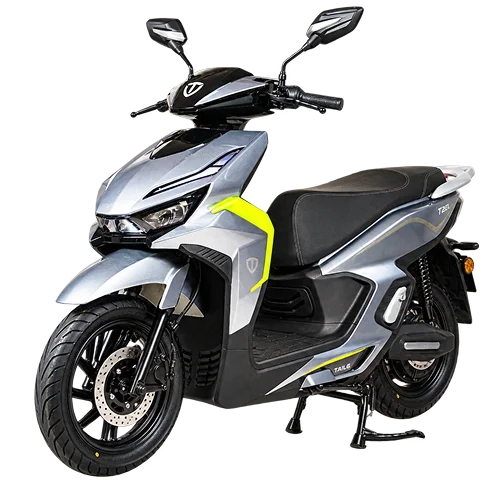
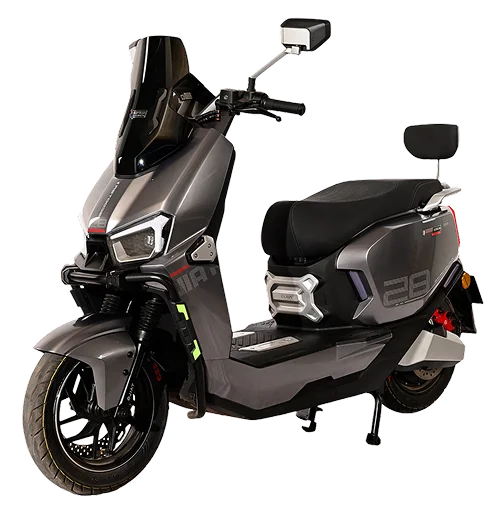
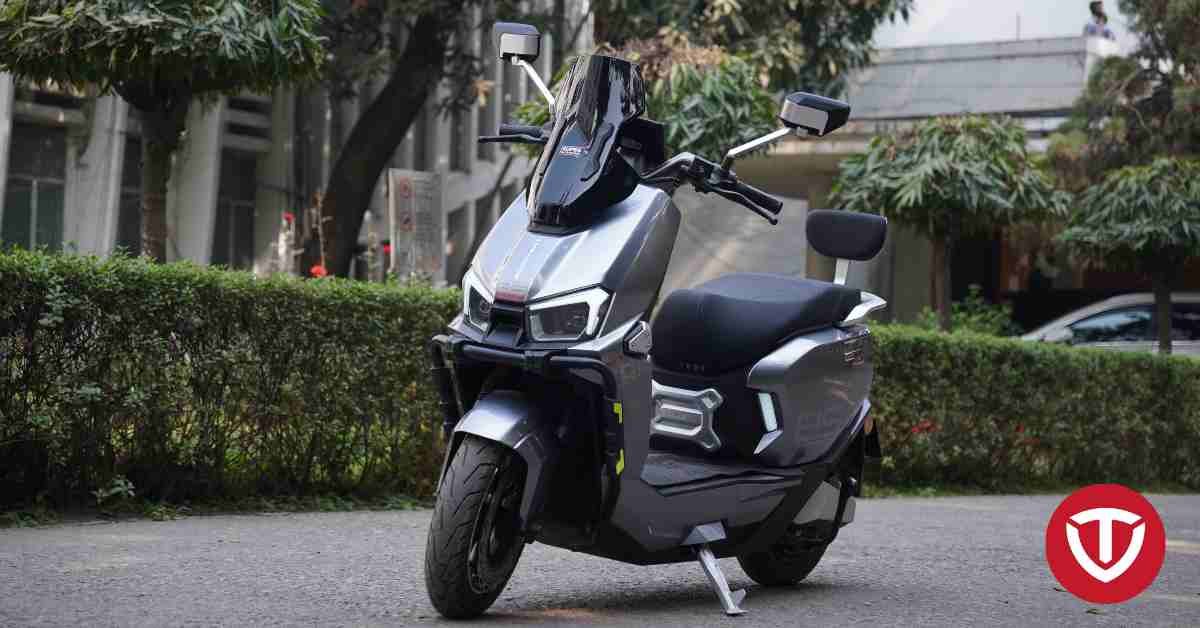
The TAILG Jaguar T72L uses a 76V/32Ah LMFP battery, making its battery technology one of the bike’s key differentiators.
It offers a claimed range of up to 110 km, while its 2000W motor can deliver a top speed of 65 km/h. The battery is rated for 3000+ charging cycles with up to 80% capacity retention under the relevant testing conditions.
But the T72L isn’t designed around battery technology alone. It also features front and rear dual-piston caliper brakes, providing a premium braking setup suited to the bike’s performance. Its 14-inch wheels contribute to road stability and higher ground clearance, while the dual-projection LED headlights and 7-inch HD display add to its premium character.
The battery itself is also removable, allowing riders to charge it without necessarily moving the entire bike.
There is also cruise control and reverse gear for additional convenience. This combination makes the T72L particularly relevant for riders who want more than basic electric transportation. It is aimed at people looking for a combination of battery longevity, performance and premium features.
Are LMFP Batteries the Future?
LMFP still has challenges to overcome. Researchers point to issues such as relatively low electrical conductivity, slower lithium-ion diffusion and manganese-related degradation mechanisms as areas requiring continued development. Manufacturing processes and material engineering are also still being optimized.
So calling LMFP the “next generation” doesn’t mean it has already replaced every other lithium-ion chemistry. Rather, LMFP represents an important direction in lithium-ion battery development.
The industry is looking for battery technologies that can deliver higher energy density without giving up the safety, durability and cost advantages that have made LFP successful. LMFP is one of the technologies attempting to achieve exactly that balance.